
Best Deck Stains for East Tennessee Weather
Choosing the right deck stain for your East Tennessee home isn't just about color. It's about finding a product that can withstand our unique climate challenges. The Tri-Cities region experiences approximately 45 inches of rain annually, summer humidity levels that regularly exceed 80%, and dramatic temperature swings from the teens in winter to the 90s in summer. Not all deck stains are created equal when it comes to handling these conditions.
After years of staining decks throughout Johnson City, Kingsport, and Bristol, I've learned which products deliver long-lasting protection and which ones fail prematurely in our climate. This guide breaks down the best deck stain options for East Tennessee homeowners, with honest assessments based on real-world performance.
Oil-Based vs Water-Based Stains: Which Is Better for Tennessee?
Before diving into specific products, it's important to understand the fundamental differences between oil-based and water-based deck stains, and why this choice matters significantly in our humid climate.
Oil-Based Stains
Oil-based stains penetrate deeply into wood fibers rather than sitting on the surface. This deep penetration provides several advantages for East Tennessee decks:
- Superior moisture protection: Oil molecules fill wood pores, blocking moisture from entering while still allowing the wood to breathe
- Better for humid climates: Won't trap moisture beneath the surface like film-forming finishes can
- Forgiving application: Longer open time means you can work at a comfortable pace without visible lap marks
- Graceful aging: As they fade, oil-based stains simply lighten rather than peeling or flaking
- Enhanced wood appearance: Bring out the natural grain and warmth of wood more effectively
The trade-off? Oil-based stains need reapplication every 2-3 years in East Tennessee conditions. They also contain higher VOCs, require mineral spirits for cleanup, and take longer to dry—typically 24-48 hours before the deck is walkable. But in my experience, the protection they provide during those two years is noticeably better than what you get from water-based products.
Water-Based Stains
Modern water-based deck stains have improved dramatically over the past decade. Their advantages include:
- Quick drying: Usually ready for light traffic in 4-6 hours
- Easy cleanup: Soap and water is all you need
- Lower VOCs: More environmentally friendly and easier to work with in confined spaces
- Good UV protection: Advanced formulas include excellent UV-blocking pigments
- Color stability: Tend to maintain their color longer than oil-based options
The big advantage of water-based stains is longevity—you can get 4-6 years before needing to reapply, compared to 2-3 years for oil-based. However, they don't penetrate as deeply as oil-based products, which means moisture protection isn't quite as robust during that time. If surface preparation isn't perfect, water-based stains can peel in high-moisture environments. The shorter open time also makes application trickier—you need to work faster to avoid lap marks.
The Verdict for East Tennessee
It comes down to what matters more to you: maximum protection or longer intervals between maintenance. Oil-based stains like TWP give you better protection year-over-year, but you're restaining every 2-3 years. Water-based and latex stains stretch to 4-6 years between coats but don't protect as aggressively during that period. For most Tri-Cities homeowners, I lean toward oil-based because the protection during those two years is noticeably superior, especially on horizontal surfaces that take the most abuse from rain and sun.
My Two Go-To Deck Stain Products
After staining decks throughout the Tri-Cities for years, I've narrowed my recommendations down to two core products that cover virtually every situation. The right choice depends on your deck's current condition.
TWP (Total Wood Preservative) 100 Series — For New and Good-Condition Decks
TWP 100 Series is my favorite stain, period. When a deck is new, recently built, or in good shape with the natural wood grain still visible, TWP is what I reach for every time. This deep-penetrating oil-based formula provides exceptional moisture resistance and UV protection—exactly what you need for East Tennessee's climate.
What sets TWP apart is that it's a true penetrating stain. It soaks into the wood rather than forming a film on the surface. This means it won't peel or flake over time, even when subjected to our humidity and temperature swings. As it weathers, it simply fades gradually, and maintenance recoating is straightforward: clean the deck thoroughly and apply a fresh coat. No stripping, no heavy sanding—just clean and recoat.
TWP is available in semi-transparent tones that enhance the wood's natural grain while providing solid protection. The formula contains UV-blocking pigments that significantly slow down wood graying. Being an oil-based stain, you're looking at reapplication every 2-3 years in East Tennessee conditions, but the protection during those years is outstanding. The wood stays nourished and protected from the inside out.
The cost runs about $45-55 per gallon, which is mid-range for premium stains. Coverage is typically 150-250 square feet per gallon depending on wood porosity. For the quality of protection you get, it's worth every penny.
TWP 100 vs 1500 Series: Dry Time Differences
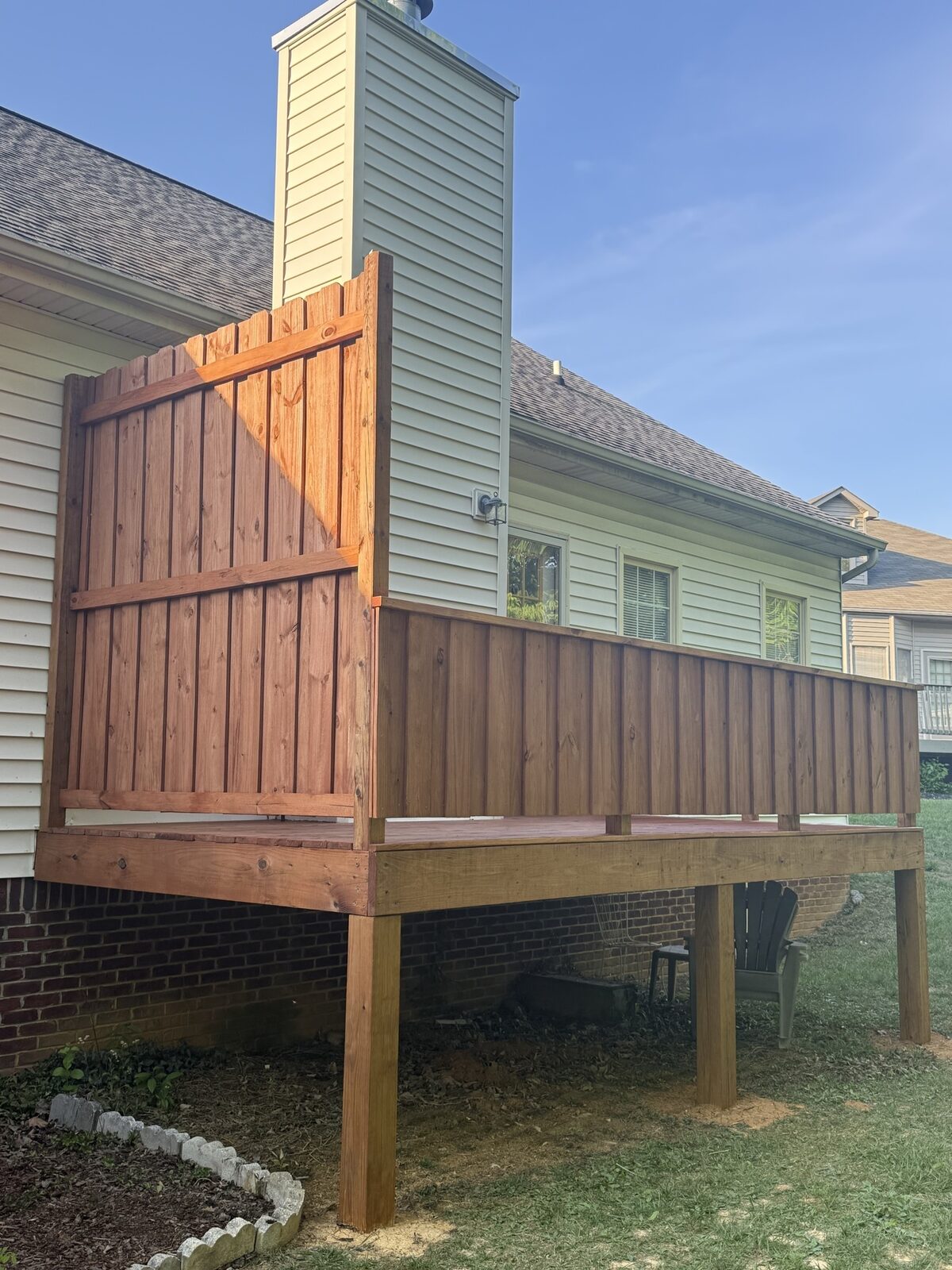
The TWP brand sells two main lines used on East Tennessee decks: the 100 Pro-Series (the original higher-VOC oil-based formula) and the 1500 Series (a reformulated low-VOC version that's also EPA-registered as a wood preservative). The colors are similar across both lines, and both penetrate rather than form a film. The biggest practical difference is dry time.
- TWP 100 Pro-Series: per the manufacturer's TDS, a 24-hour minimum air dry at 78°F and 50% relative humidity before normal foot traffic. In real Tri-Cities humidity (often 70%+ in summer), that stretches to 36–48 hours in practice. We tell clients to plan for two full days off the deck after we wrap.
- TWP 1500 Series: the low-VOC chemistry releases its carriers significantly faster, so dry times are markedly shorter than the 100 Pro-Series. Same-day walk-on is realistic under reasonable conditions, which is a real schedule advantage on jobs where the homeowner needs the deck back in service quickly.
For a customer who can clear the deck for a couple of days, either formula works — both deliver the same protective oil chemistry. For a customer who needs the deck back fast, the 1500 is the practical pick. For comparison reading, see our recent TWP 100 Rustic project walk-through in Kingsport.
Flood Solid Stain — For Worn-Out and Previously Solid-Stained Decks
Here's the reality: not every deck is a candidate for a beautiful semi-transparent finish. If your deck has already been painted, previously solid-stained, or is so worn and weathered that the wood surface is past the point of showing off natural grain, there's no going back to semi-transparent. You need a solid stain, and Flood makes the best one I've used.
Flood Solid stain provides a thick, opaque coat that completely covers the wood surface, hiding imperfections, gray weathering, old stain remnants, and surface damage. It essentially gives a worn-out deck a fresh start. The finish is uniform and clean, and it comes in a wide range of colors that let homeowners match their siding, trim, or personal preference.
Because Flood is a water-based solid stain, you get the longevity advantage of latex—typically 4-6 years between reapplications in East Tennessee conditions. That's significantly longer than oil-based semi-transparent stains. The trade-off is that solid stains sit on the surface rather than penetrating into the wood, so they don't nourish the wood fibers the way TWP does. But for a deck that's already been sealed over with solid stain or paint, penetration isn't really an option anyway.
Flood also dries faster than oil-based products—usually ready for light foot traffic in 4-6 hours—and cleans up with soap and water. Cost runs about $35-50 per gallon with coverage of 200-400 square feet per gallon depending on surface condition.
I tell homeowners this: if your deck is in good shape and you want to see the wood, go with TWP. If it's been painted or solid-stained before, or if the wood is too far gone for semi-transparent, Flood Solid is the move. Trying to force a semi-transparent stain onto a deck that's been solid-coated is a recipe for disappointment—it won't absorb properly and you'll be doing it again in a year.
Other Deck Stain Products Worth Knowing
While TWP and Flood Solid cover the vast majority of deck situations I encounter, there are a few other products that perform well in East Tennessee.
Ready Seal
Ready Seal is the most DIY-friendly deck stain on the market. It requires no back-brushing and produces no lap marks, even if you stop mid-board. It's an oil-based penetrating stain that lasts 2-3 years and costs $35-45 per gallon. If you're a homeowner doing your own deck maintenance and don't want to fuss with technique, Ready Seal is a solid choice. It won't match TWP's level of protection, but it's nearly foolproof.
Cabot Australian Timber Oil + Cabot® Semi-Transparent
Cabot is readily available at major home improvement retailers throughout the Tri-Cities. The Australian Timber Oil line is a decent oil-based penetrating stain that provides good UV and moisture protection for 2-3 years. Cost runs $40-50 per gallon. It's a respectable mid-range option if TWP isn't available locally.
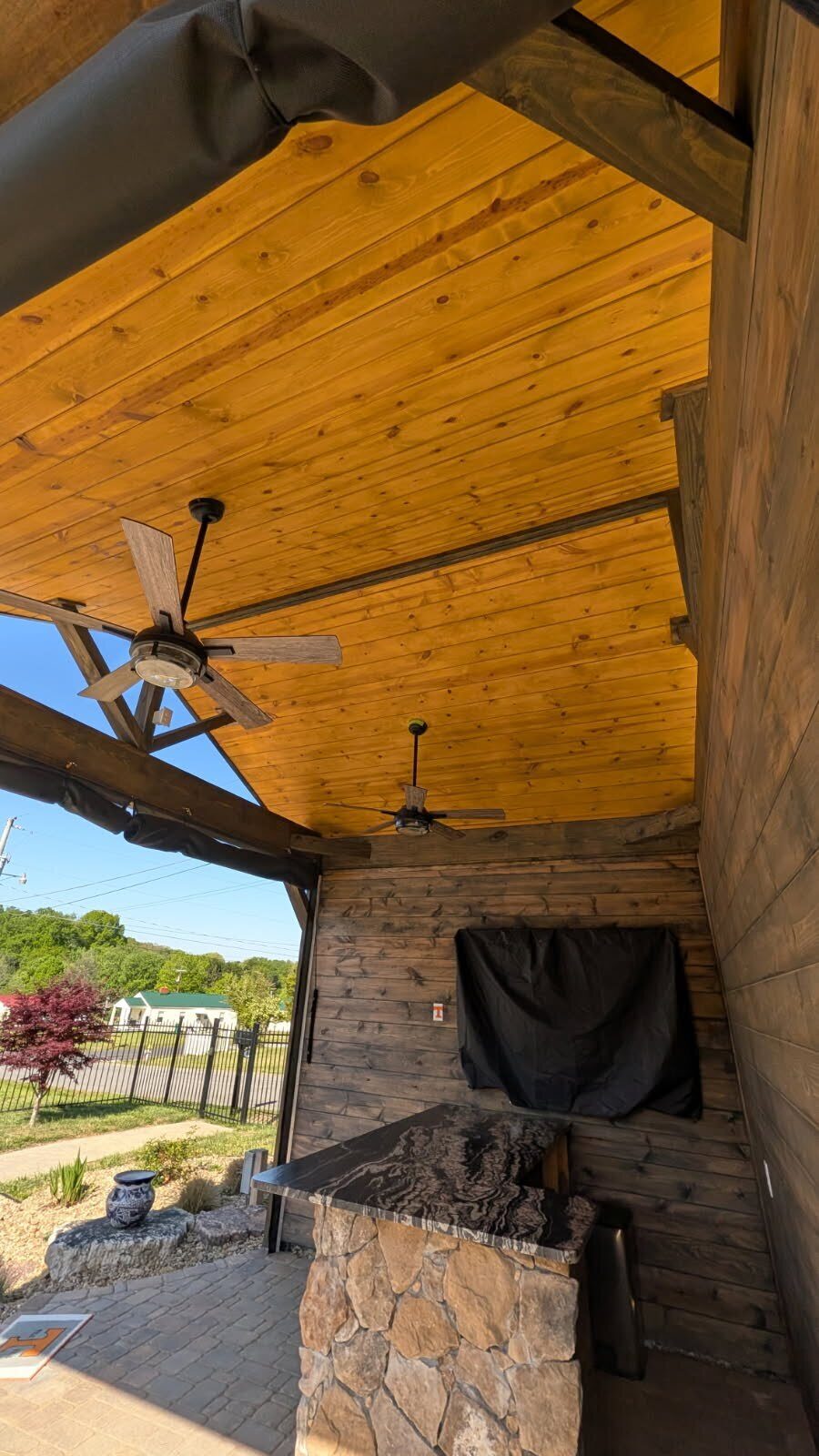
Cabot also makes a semi-transparent line we use on vertical surfaces like gazebo ceilings, pergolas, and accent walls. Like all penetrating semi-transparent stains, restraint matters — applying too heavy is the most common reason these jobs fail. See our recent Tri-Cities gazebo project for what happens when Cabot® semi-transparent is over-applied vs. how it should look when applied correctly.
Benjamin Moore Arborcoat (Water-Based)
For homeowners who specifically want a water-based product, Arborcoat is the best option. It's available in multiple opacity levels and provides 4-6 years of protection in solid formulations. It costs $55-70 per gallon—premium pricing, but you get longer intervals between maintenance coats.
PPG ProLuxe® Premium Deck Wood Finish — The Premium Two-Coat Option
At the opposite end of the spectrum from DIY-friendly products sits PPG ProLuxe® Premium Deck Wood Finish (formerly Sikkens Cetol DEK Finish) — a $120-per-gallon, two-coat, film-building finish with a semi-gloss sheen nothing else in this guide has. It's the most expensive deck stain I've ever bought and the most demanding one I've ever applied, but the Mahogany result on a recent Piney Flats project was one of the prettiest decks we've ever done. Read the full ProLuxe® review with photos, video, and real pricing.
Application Tips for East Tennessee's Humid Climate
Even the best deck stain will fail if applied incorrectly. Here are the critical application factors for success in our humid Tri-Cities climate:
Check the Dew Point
This is the most overlooked factor in deck staining. The deck surface temperature must be at least 5 degrees above the dew point, or moisture will condense on the wood as you're staining, preventing proper absorption and adhesion. Check local weather forecasts for dew point information, and use an infrared thermometer to verify surface temperature before starting.
Choose the Right Temperature Window
The ideal temperature range for deck staining is 50-80°F. Staining in temperatures above 80°F causes rapid drying, which can lead to lap marks and poor penetration. Below 50°F, stain won't penetrate properly or cure correctly. Spring and fall are ideal seasons in East Tennessee.
Avoid Direct Hot Sun
Don't stain deck boards in direct sunlight during summer. The sun heats the wood surface, causing stain to dry too quickly before it can penetrate. Work in shade or during morning/evening hours when the sun is off the deck.
Back-Brush or Back-Roll
If you're spraying stain (which is the fastest application method), always back-brush or back-roll immediately after spraying. This works the stain into the wood grain and ensures even penetration. It's the difference between a 2-year finish and a 3-year finish.
Watch the Weather Forecast
Don't apply deck stain if rain is expected within 24 hours (48 hours for oil-based products). Moisture hitting freshly stained wood will ruin the finish. Tennessee weather can change quickly, so check extended forecasts and err on the side of caution.
Preparation Is Everything
The most important step in deck staining isn't the stain itself—it's the prep work. Power wash the deck to remove dirt, mildew, and old failing finish. Use a deck cleaning solution formulated for wood. Sand any rough spots or splinters. Most importantly, let the wood dry completely for at least 48 hours (72 hours is better) before applying stain.
Use a moisture meter if possible. Wood moisture content should be below 15% before staining. In Tennessee's humid climate, this drying period is critical—rushing it is the number one cause of stain failure.
Maintenance Schedule for East Tennessee Decks
The longevity numbers I've mentioned assume proper maintenance between restaining cycles. Here's the maintenance schedule I recommend for deck staining in the Tri-Cities region:
Annual Maintenance
Once a year, power wash your deck with a mild deck cleaning solution. This removes dirt, pollen, and organic matter that can trap moisture and promote mildew growth. Spring is the ideal time for this annual cleaning—after winter but before summer heat.
While cleaning, inspect the deck carefully. Look for soft spots that might indicate rot, loose boards, popped nails, or loose screws. Check railings for stability. Address any structural issues before they become major problems.
Every 2-3 Years: Oil-Based Restaining
If you're using a penetrating oil-based stain like TWP, plan on restaining every 2-3 years. High-traffic areas and horizontal surfaces exposed to full sun may need attention on the shorter end of that range. Vertical surfaces like railings and skirting typically last longer.
The beauty of penetrating oil stains is that maintenance restaining is simple. Clean the deck thoroughly, let it dry, and apply a fresh coat. No stripping or heavy sanding required unless the previous stain has failed. That easy maintenance cycle is one of the reasons I prefer oil-based stains.
Every 4-6 Years: Water-Based/Solid Restaining
Water-based and solid stains like Flood Solid can go 4-6 years between coats, which is a real advantage for homeowners who don't want to deal with frequent maintenance. Monitor high-traffic areas like stair treads and the area in front of doorways—these wear fastest. When the time comes to recoat, proper cleaning and light sanding of any peeling areas will ensure good adhesion of the new coat.
Seasonal Inspections
Take a quick walk around your deck at the start of each season. Look for areas where stain is wearing thin, particularly on stair treads and in front of doorways. Catch these spots early, and you can touch them up before moisture penetrates the wood.
Making Your Decision
Choosing the right deck stain comes down to one question: what condition is your deck in right now?
New deck or wood in good shape with visible grain: TWP 100 Series, every time. It's my favorite product for a reason—the penetrating oil formula protects from the inside out and lets the natural beauty of the wood show through. You'll restain every 2-3 years, but the recoat process is simple and the protection during those years is the best I've seen.
Deck that's been painted or solid-stained before: Flood Solid stain. Once a deck has been coated with solid stain or paint, there's no going back to semi-transparent. The wood won't absorb a penetrating stain properly over an existing solid coating. Flood gives you a clean, uniform finish that lasts 4-6 years.
Heavily worn deck with no previous solid coating: This is the judgment call. If the wood still has enough good grain showing, I'll recommend TWP to bring it back. If it's too far gone—gray, splintering, pitted—Flood Solid is the better move for a deck that looks great again.
DIY homeowner who wants it easy: Ready Seal. Nearly foolproof application with no back-brushing required.
Remember that even the best stain is only as good as the preparation. Taking time to properly clean, repair, and prep your deck will have a bigger impact on longevity than the specific product you choose.
If you're in the Johnson City, Kingsport, or Bristol area and would like professional deck staining with premium products selected for our climate, Rock's Painting has extensive experience protecting decks throughout the Tri-Cities. We handle all the prep work, application, and cleanup, ensuring your deck gets the protection it deserves.
Contact us for a free estimate on your deck staining project. We serve homeowners throughout the region with deck staining in Johnson City, deck staining in Kingsport, and deck staining in Bristol. Let us help you choose and apply the perfect stain for your deck's specific needs and exposure conditions.
Frequently Asked Questions
What is the longest lasting deck stain?
Water-based solid stains like Flood Solid last the longest—typically 4-6 years—but they hide the wood grain completely. For natural wood appearance with good durability, oil-based penetrating stains like TWP 100 Series last 2-3 years in East Tennessee's climate. Oil-based stains provide better protection during their lifespan, while water-based stains give you longer intervals between maintenance coats. The right choice depends on your deck's condition and whether you want to see the natural wood.
Is oil-based or water-based deck stain better?
In my experience, oil-based stains like TWP provide better protection year-over-year in East Tennessee's humid climate. They penetrate deeper, enhance wood grain, and handle our humidity better. The trade-off is maintenance frequency: oil-based stains need reapplication every 2-3 years, while water-based/latex stains last 4-6 years. I prefer oil-based for the superior protection during those years, but water-based solid stains like Flood are the right call for decks that have already been painted or solid-stained.
Can you put semi-transparent stain over a solid stain?
No. Once a deck has been solid-stained or painted, you cannot go back to semi-transparent. The wood pores are sealed by the solid coating, so a penetrating semi-transparent stain like TWP won't absorb properly. Your options are to apply another coat of solid stain (like Flood Solid) or to fully strip the old coating down to bare wood—which is extremely labor-intensive and often not worth the cost. In most cases, sticking with a quality solid stain is the practical choice.
Can you stain a deck in direct sunlight?
No, avoid staining in direct sunlight. Sunlight causes the stain to dry too quickly, preventing proper penetration and leading to lap marks. Stain in shade, overcast conditions, or when the sun has moved off the deck surface. In East Tennessee summers, early morning or late afternoon application works best. The deck surface temperature should ideally be below 80 degrees for optimal stain absorption.
Do I need to strip old stain before restaining?
It depends on the type and condition. If you used a penetrating oil-based stain like TWP that has faded naturally without peeling, you can simply clean the deck and apply a fresh coat—no stripping needed. That's one of the biggest advantages of penetrating stains. If the existing solid stain or paint is peeling or flaking, you'll need to scrape and sand the failing areas before recoating. A solid stain in good condition just needs cleaning and light scuffing before a new coat of solid stain goes on.
What color deck stain is most popular in the Tri-Cities?
Natural cedar tones and warm honey-brown colors are the most popular in our area. These complement the natural surroundings of East Tennessee while showing off the wood grain. Semi-transparent stains in shades like TWP Cedartone are consistently our most requested colors. For solid stains, neutral grays and warm tans are popular because they coordinate well with a variety of siding colors. Darker walnut and mahogany tones are also popular for homeowners who want richer contrast.